
Here’s the answer up front: LEGO® is expensive because the sets got huge, because licensed themes carry a real markup, and because the manufacturing tolerances are closer to aerospace than to toys. What LEGO® is not, according to the data, is more expensive per brick than it used to be. I ran the numbers on 6,087 sets in our database, and the results surprised me enough to rewrite my intro.
Prices rose 62 percent. Bricks didn’t.
Everyone feels like LEGO® keeps getting pricier, and at the checkout line, everyone is right. The average new set cost $53 in 2015 and costs $86 in 2026. That’s a 62 percent jump, well ahead of general inflation, and it seems like the whole story.
Watch the third column. This is every set in our database with a US retail price, a piece count, and a launch date, 3,480 sets across the last twelve years:
| Year | Avg set price | Price per piece | Avg pieces per set |
|---|---|---|---|
| 2015 | $53.00 | 10.8¢ | 502 |
| 2017 | $60.34 | 10.6¢ | 622 |
| 2019 | $62.26 | 11.2¢ | 600 |
| 2021 | $68.66 | 10.8¢ | 766 |
| 2023 | $75.08 | 11.1¢ | 752 |
| 2025 | $77.98 | 11.2¢ | 740 |
| 2026 | $85.92 | 11.0¢ | 839 |
Data: Baumlinks Brick Data, August 31, 2026. Averages across all rankable sets with US pricing, by launch year.
Price per piece in 2015: 10.8 cents. Price per piece in 2026: 11.0 cents. Across twelve years, through a pandemic, an inflation spike, and two rounds of official price increases, the cost of an average LEGO® brick moved two tenths of a cent. Meanwhile the average set grew from 502 pieces to 839, a 67 percent increase that tracks the price increase almost exactly.
You are not paying more for LEGO®. You are buying more LEGO® per box, whether you asked to or not.
Piece inflation is the real story
Why did sets balloon? Because LEGO® figured out adults. Kids want a playable X-wing; adults want a 7,541-piece Millennium Falcon that doubles as furniture, and adults have credit cards. The flagship arms race that followed gave us the 9,090-piece Titanic, a $999.99 Death Star, and a product line where the showpiece keeps growing because showpieces are what the highest-margin customers want.
The sticker shock is real, but it’s set-size shock. The $20 and $30 shelf still exists and still follows the same per-piece math; I keep running lists of the best of them in our sets under $30 and sets under $50 roundups, updated with live data.
The license tax is real: 28 percent
The second finding from the database is one collectors have suspected forever, now with a number attached. Comparing current sets by theme type: licensed themes (Star Wars, Harry Potter, Marvel, and friends) average 11.9 cents per piece across 416 sets, while LEGO®’s own designer lines (Icons, Architecture, Art, and the other model-making themes) average 9.2 cents across 144 sets.
That’s a 28 percent premium for the privilege of the Star Wars logo, and it goes a long way toward explaining why the sets that feel overpriced usually have a movie attached. Licensors get paid per box, and that cost lands on you. It’s the same force behind the secondary-market madness I covered in why the Black Pearl costs so much and why Cloud City is a mortgage payment: licensed exclusivity, fixed supply, adult money.
So what does a brick actually cost to make?
LEGO® has published the manufacturing specs over the years, and they explain a chunk of that 11 cents. Bricks are molded to a tolerance of 4 micrometers (a human hair runs about 70), which is why a 2026 brick clicks onto a 1986 brick. The company reports roughly 18 defective elements per million produced. The steel injection molds that hit those tolerances are six-figure tools, amortized across production runs, and ABS plastic prices ride oil prices, which is part of why the company has been pouring money into alternative materials.
None of that makes an 11-cent brick cheap. Knockoff brands mold vaguely compatible bricks for a fraction of the price, with tolerances and clutch power to match. What it makes the brick is consistent, which for a product whose entire value is that every piece fits every other piece ever made, is the product.
The 11-cent rule
The practical takeaway from all this data fits in one sentence: the average LEGO® set costs about 11 cents per piece, so divide the price by the piece count before you buy. Under 8 cents is a genuinely good deal. Between 9 and 12 cents is normal. Above 14 cents, you’re paying for something besides bricks (usually a license, big specialty pieces, or electronics), and you should decide whether that something matters to you. Five seconds of division, and no shelf tag can lie to you again.
Pair it with points: if you’re buying at LEGO.com anyway, our Insiders points calculator tells you what the purchase earns back.
The best-value sets in production right now
Since the database was open anyway, here are the current sets with the lowest price per piece (500 pieces minimum, so no polybag technicalities), as of tonight:
| Set | Theme | Pieces | US MSRP | Per piece |
|---|---|---|---|---|
| Notre-Dame de Paris (21061) | Architecture | 4,383 | $229.99 | 5.2¢ |
| Spring Wreath (40957) | Seasonal | 747 | $39.99 | 5.3¢ |
| Hokusai: The Great Wave (31208) | Art | 1,810 | $99.99 | 5.5¢ |
| Mercedes-AMG G 63 & SL 63 (76924) | Speed Champions | 808 | $44.99 | 5.6¢ |
| Bonsai Tree (10281) | Icons | 878 | $49.99 | 5.7¢ |
| Orange Cat (21376) | Ideas | 1,755 | $99.99 | 5.7¢ |
| Mini Hogwarts Castle (40975) | Harry Potter | 700 | $39.99 | 5.7¢ |
| Supply Llama (77071) | Fortnite | 691 | $39.99 | 5.8¢ |
| Tuxedo Cat (21349) | Ideas | 1,710 | $99.99 | 5.8¢ |
Data: Baumlinks Brick Data, August 31, 2026. Current, rankable sets of 500+ pieces, ranked by US MSRP per piece.
Two from that table I own and vouch for. The Bonsai has been the best fifty dollars in the catalog since 2021, with swappable canopies and a finished look that reads as decor rather than toy:
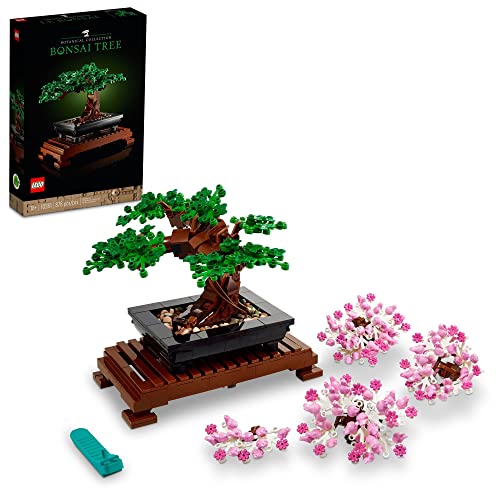
And the Great Wave is the value king of the entire wall-art line at 5.5 cents per piece, which is why it also shows up in my LEGO® art hanging guide:

*%5D(https://www.amazon.com/dp/B08HVXZW8X?tag=baumlinks2626-20&linkCode=ogi&th=1&psc=1&ascsubtag=p11991-s1)
*%5D(https://www.amazon.com/dp/B0BBJ5QXX5?tag=baumlinks2626-20&linkCode=ogi&th=1&psc=1&ascsubtag=p11991-s2)
%5D(https://baumlinks.com/about-me/)
Value FAQ
Is LEGO® more expensive than it was ten years ago?
Per set, yes, by 62 percent. Per piece, no: 10.8 cents then, 11.0 cents now. Sets got 67 percent bigger, and that’s nearly the whole difference.
Why are Star Wars sets so expensive?
Licensing. Licensed themes run about 28 percent more per piece than LEGO®’s own lines in our current-set data, and Star Wars adds collector demand on top. When a set retires, that demand keeps compounding; see our retirement tracker for which ones are about to start.
What’s a good price per piece?
Under 8 cents: buy with confidence. 9 to 12: fair. Above 14: you’re paying for the license or specialty parts, so make sure you want them. The table above lists everything currently under 6.
The next time someone at a party tells you LEGO® prices are out of control, you now have a twelve-year data table and the phrase “piece inflation.” Use them wisely.

Matt Buxbaum · CEO at Baumlinks LLC
Matt B. spends his time arm wrestling, boxing, and most importantly, building LEGO®. His eclectic tastes give you dynamic information on all things LEGO® news and LEGO® product releases.
Latest from Matt: The Best LEGO® Minifigure Display Cases And Storage (2026) · The Best LEGO® Display Cases In 2026 (With Real Weight Data) · What Are LEGO® VIP Points Worth? (2026 Calculator + Conversion Table)