
%5D(https://baumlinks.com/about-me/)
Here’s the answer up front: the most valuable LEGO® is the stuff almost nobody was able to buy, like a set pulled ten days before launch, a gold figure hidden in $2.99 blind bags, or a goat that shipped in one box in 2011 and then vanished for 13 years.
Start with the goat. Mill Village Raid cost $69.99 in 2011 and came with two of them. By early 2024 a single goat was selling for more than $80 on eBay, which put the pair above $160, more than twice what the whole 663-piece set cost new.
I went through nine of these oddities with the Baumlinks database open, checking how many collectors own each one against how many want it. Every set behind them that has a row in our data scores above 96 out of 100 on the Baumlinks Heat Index.
Then and now, in dollars
| Item | What it cost | What it fetches |
|---|---|---|
| Goat, from Mill Village Raid (7189) | $69.99 for the set, two goats inside | about $67 to $80 and up, each |
| V-22 Osprey (42113) | $119.99 or $149.99, depending on the source | about $1,921 sealed |
| Mr. Gold | $2.99 blind bag | about $9,441 |
| Cloud City Boba Fett | came inside a 2003 store exclusive | about $1,919 to $1,962 |
| Comic-Con 2013 Spider-Woman | free, by raffle | about $6,200 to $7,000 |
| Solid gold brick | a gift holding about $2,100 of gold | $19,793 at auction |
| 14k gold C-3PO | a magazine giveaway | estimated $200,000, no confirmed sale |
| Taj Mahal (10189) | $299.99 | $3,000 at the peak, $588 to $1,046 now |
| Common BASF test brick | never sold | about $11 |
Prices are quoted from the sources linked in each section, as read on November 11, 2026. Euro and pound figures converted at November 10, 2026 rates.
Rarity starts with a short shelf life
LEGO® doesn't publish how long a set will stay in production. Brickfact, which tracks retirements, finds no fixed rule and says plenty of sets last only a year or two. Once a set leaves the catalog, the number of sealed boxes can only go down.
Our own numbers agree. The Baumlinks database has launch and exit dates for 4,537 retail sets of 100 pieces or more. The median set stayed on sale for 19 months, and 80 percent were gone within two years. Only 6 percent lasted seven months or less, which is where Mill Village Raid and its goats sit.
The median retail set stays on sale for 19 months and 80 percent are gone within two years. Mill Village Raid, the only set the original goat came in, lasted seven. Data: Baumlinks Brick Data, August 28, 2026. 4,537 sets with a US price and known launch and exit dates.
That's the mechanism behind the best-known study of LEGO® as an investment. Researchers at the Higher School of Economics looked at 2,322 sets released between 1987 and 2015 and put the average return at 10 to 11 percent a year. The spread is the part to remember: individual sets ranged from losing 50 percent a year to gaining 600 percent. The nine below sit at the far end of that range, and each got there by a different accident.
I covered what new sets cost in why LEGO® is so expensive, and the priciest boxes on the shelf are ranked in the most expensive sets at retail. This post is about what happens after they're gone, and here is how the demand looks in our data:
One pattern runs through the top of that ranking. Of the 500 sets with the most wanters per owner, 411 never had a US retail price. They were prizes, giveaways and promotions, and eight of the top twelve are Comic-Con exclusives. The things collectors most want and can't get were mostly never for sale.
| Rank | Entry | Score |
|---|---|---|
| 10th | Spider-Woman | 11.36 |
| 18th | Green Arrow | 9.43 |
| 20th | Black Suit Superman | 9.29 |
| 32nd | Mr. Gold | 7.69 |
| 157th | Chrome gold C-3PO | 3.95 |
| 265th | V-22 Osprey | 3.06 |
| 334th | Cloud City | 2.73 |
| 696th | Taj Mahal, 2008 | 1.79 |
| 2,585th | Mill Village Raid | 0.81 |
| 3,881st | Taj Mahal, 2017 | 0.63 |
Ranked by wanters per owner among 16,005 sets, the three Comic-Con 2013 figures all land in the top 20 and Mr. Gold is 32nd. Of the top 500, 411 never had a US retail price. Data: Baumlinks Brick Data, August 28, 2026. Counts are self-reported by Brickset members.
Sets that were never supposed to exist
LEGO® V-22 Osprey (42113): pulled 10 days before launch
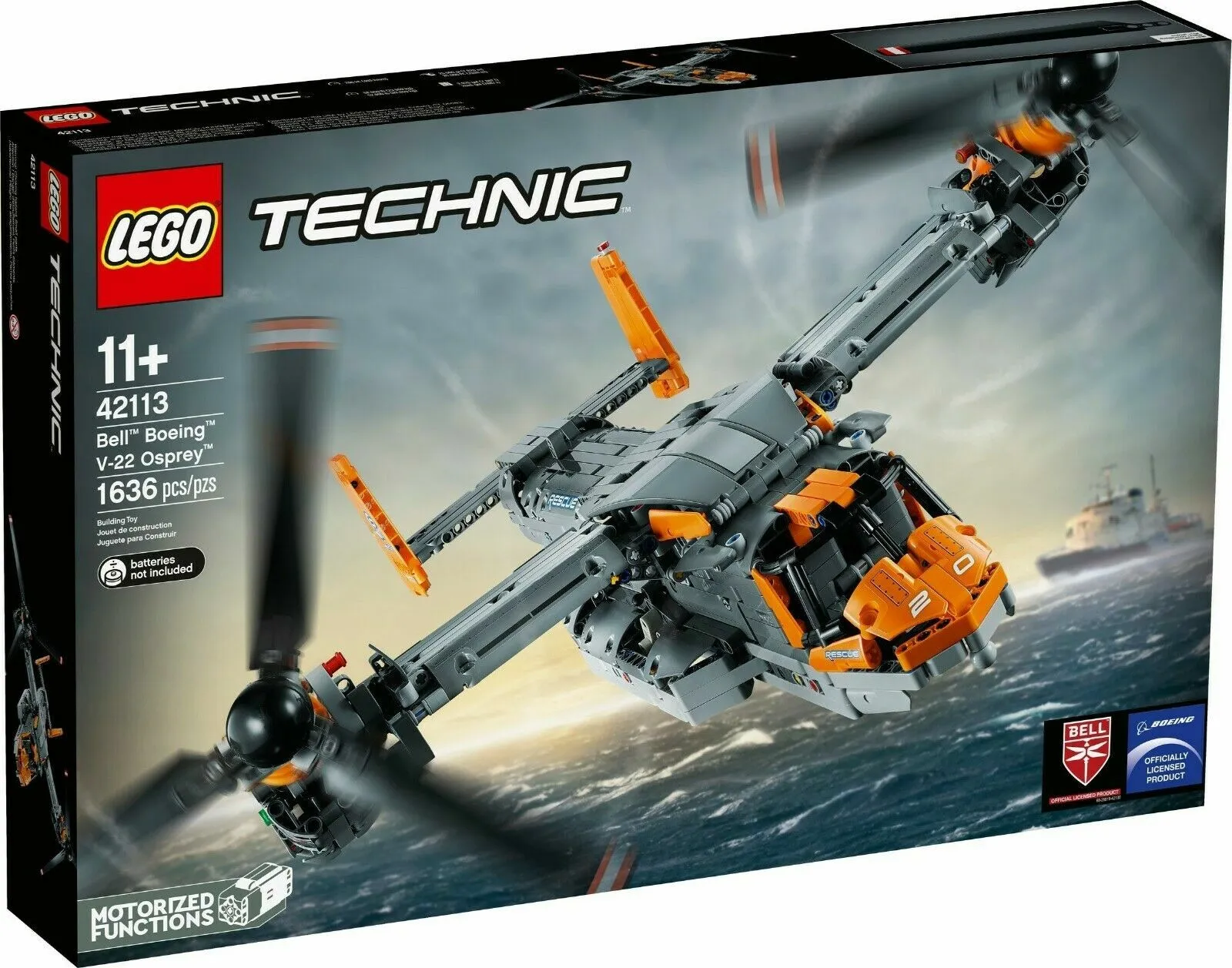
Ten days before its 2020 release date, with boxes already delivered to retailers, LEGO® cancelled the Technic Bell Boeing V-22 Osprey. A German anti-war group, the German Peace Society, had complained about the set, and LEGO®'s own statement conceded that the real aircraft is flown only by the military.
Shops that already had their shipments were allowed to sell them, so some boxes reached buyers, and the scarcity shows up in our database. Of the eight Technic sets with 500 or more pieces that LEGO® made for 2020, the Osprey has the fewest owners on Brickset: 727, against 10,834 for the Lamborghini Sián. Another 2,228 members have it on their want list, three for every one who owns it.
The all-time size ranking is in biggest Technic sets.
BrickEconomy values a sealed copy at $1,921. The trackers disagree on what it was meant to cost, with BrickRanker listing $149.99 and BrickEconomy $119.99, so the sealed value is somewhere between thirteen and sixteen times retail. Brickset's reviewer, who built one and found a gearbox that is easy to strain and break, suspects the set was cancelled because of that flaw. That remains the reviewer's suspicion; LEGO®'s statement gives only the military reason.

Of the eight Technic sets with 500 or more pieces made for 2020, the Osprey has the fewest Brickset owners: 727, against 10,834 for the Lamborghini Sián. Data: Baumlinks Brick Data, August 28, 2026. Value: BrickEconomy, November 11, 2026. List price: BrickEconomy and BrickRanker disagree.
Bayer and BASF test bricks: the ones staff took home
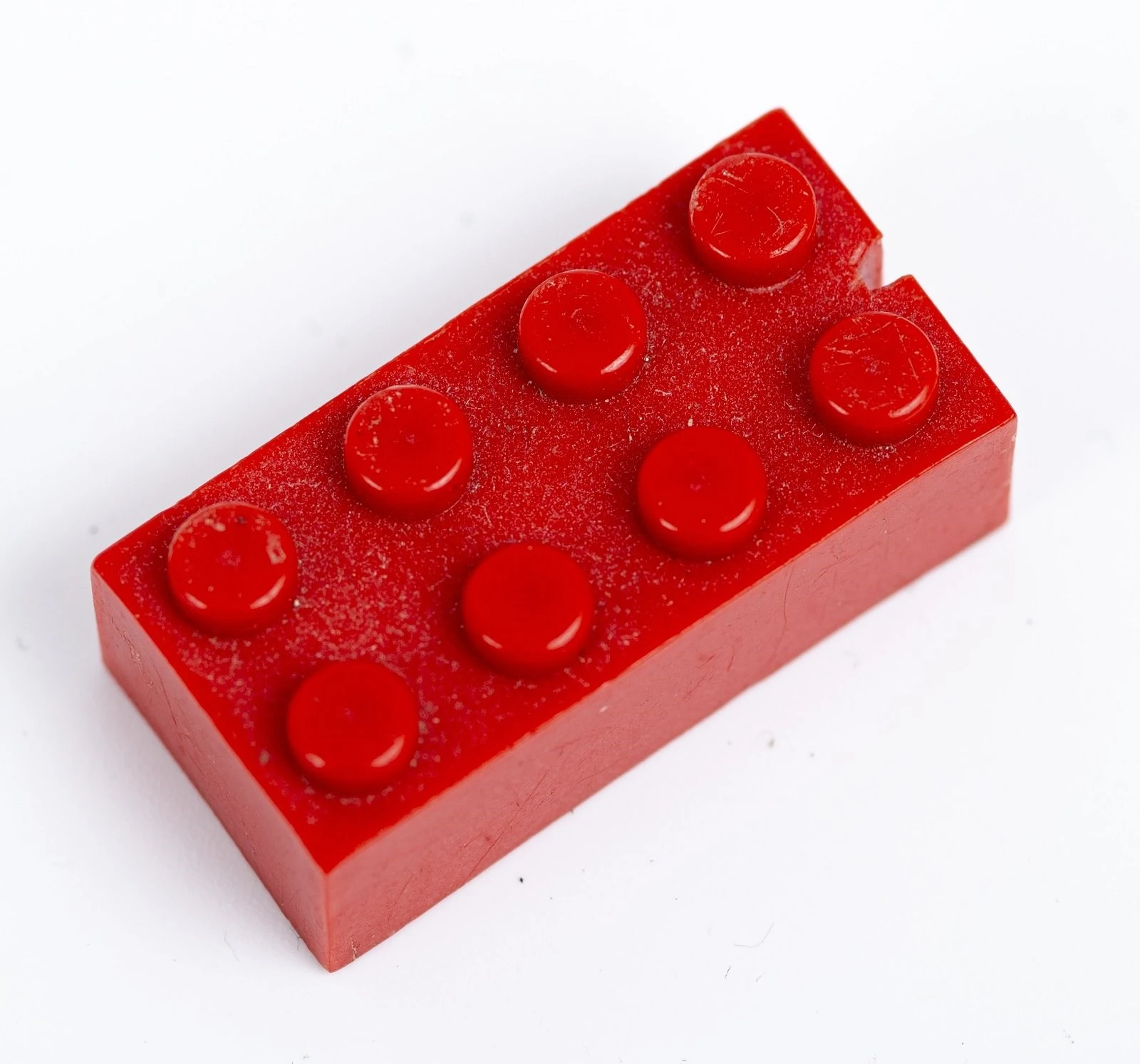
At Christmas 1965, Bayer handed bags of plastic bricks to its staff in Leverkusen. They looked like LEGO® bricks because they came out of LEGO® molds. Bayer and BASF supplied LEGO®'s plastic, and LEGO® had handed them some of its older molding machines and 2x4 brick molds for material trials. The trial bricks had to go somewhere.
Some carry a letter from A to D. The Brothers Brick explains that the four versions had slightly different studs to test clutch, the grip that holds two bricks together, and C became the standard.
They still surface at flea markets in the Cologne area. This is also the one entry on the page most readers could afford. A common BASF brick sold on eBay for €9.99, about $11. None were ever sold in a store, and a common one still costs less than lunch. That price is for a common brick; I haven't found a reliable figure for the scarce colors, so I'm not quoting one.

Test bricks carry a letter from A to D for a clutch test, and C became the standard. A common BASF brick sold on eBay for €9.99, about $11. Cited facts, not Baumlinks data. Sources: The Brothers Brick, Eurobricks, eBay; converted November 10, 2026.
One tiny piece carrying the whole price
Cloud City Boba Fett: the first printed arms

No minifigure had printed arms before this Boba Fett. He came in one set, Cloud City, which was sold only in LEGO® stores and retired in March 2005.
One figure out of seven is now carrying a 698-piece set. In our database 2,376 Brickset members own Cloud City and 6,486 want it, which makes it the 79th most-wanted set out of 23,108. Three of his boxmates are nearly as hard to find: Lando Calrissian, Luke Skywalker and Princess Leia each appear in this set alone, and the four of them hold ranks 41 through 44 on our rarest Star Wars minifigures list.
The price trackers land close together on a new one. BrickPicker has it at $1,961.77 and BrickRanker at $1,918.96, close to two thousand dollars for a figure an inch and a half tall. They part ways on used copies: BrickPicker's used price is only 4 percent lower, and BrickRanker puts a used one about 31 percent below new. The full story of the set is in why Cloud City is so expensive.

Cloud City holds four of the rarest Star Wars minifigures in the Baumlinks ranking, at 41st through 44th, and two price trackers value a new Boba Fett within about $43 of each other. Data: Baumlinks Brick Data, August 28, 2026. Prices: BrickPicker and BrickRanker, November 11, 2026.
The LEGO® goat: worth more than its own set
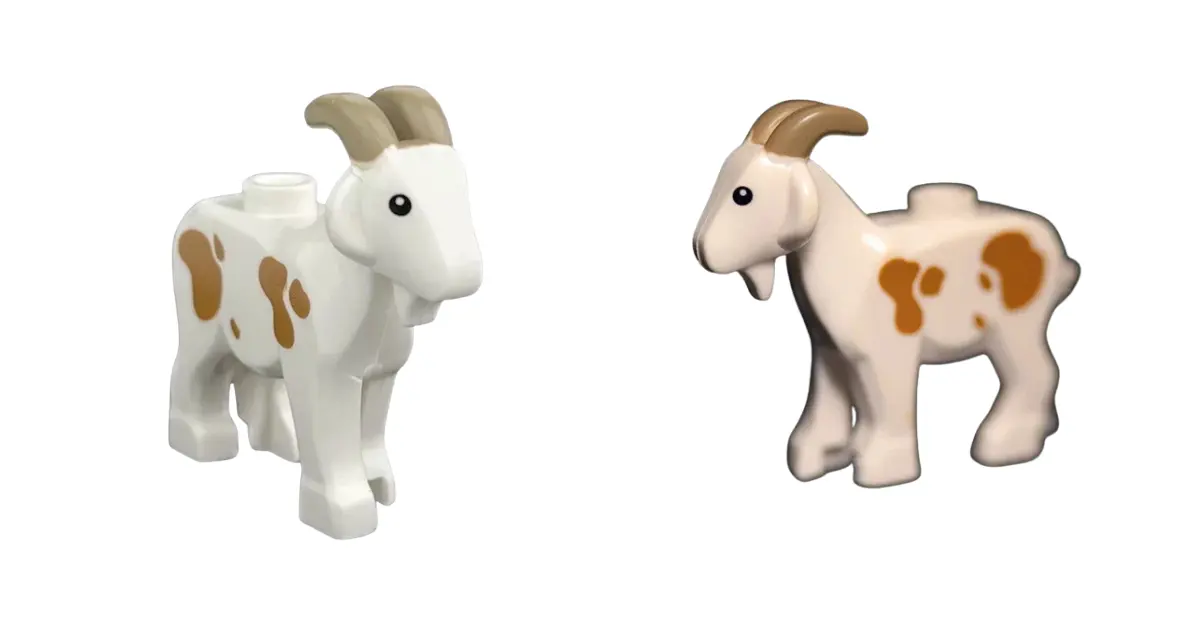
Mill Village Raid was on sale from June to December 2011. Seven months. After that the goat mold sat unused for 13 years.
That window explains the price better than the size of the run does. 6,483 Brickset members own the set, and at two goats a box that's roughly 12,966 goats sitting in logged collections. The run was large by the standards of its year: the 35 comparable retail sets from 2011, those with 400 to 1,000 pieces, have a median of 3,936 owners. It was short in time, and anyone building a medieval village wanted more than two.
LEGO® brought the goat back in January 2024 with the Series 25 Goatherd minifigure, then again in dark gray in Medieval Town Square (10332), which includes a poster advertising slashed goat prices. The designers were in on the joke. The market shrugged: Brick Fanatics checked BrickLink and found a good-condition 2011 goat still starting at a little over £50, about $67. The reason is printed on the animal. The 2024 goat is plain white apart from its dark tan horns, and the 2011 goat carries nougat-colored patches, so anyone who wants the 2011 goat still has to buy a 2011 goat. Keep that in mind for the Taj Mahal further down, where a reissue did the opposite.

Mill Village Raid was on sale for seven months in 2011, and the goat did not appear in another set for 13 years. The 2024 goat is plain white; the 2011 goat carries nougat-colored patches. Data: Baumlinks Brick Data, August 28, 2026. Price: Wargamer. Goat colors: Brick Fanatics.
Lottery-ticket scarcity

Five thousand. That's how many Mr. Gold figures LEGO® mixed into the blind bags of Minifigures Series 10 in 2013, each carrying a unique number that the finder could register on LEGO.com.
Under the shine he's an ordinary minifigure in a top hat, sprayed with chrome gold paint. What people pay for is the odds. BrickEconomy values a sealed one at $9,441, and Mental Floss has quoted about $10,000. For a bag that cost $2.99, the BrickEconomy figure is about 3,150 times the purchase price, and nothing else on this page that carried a price tag comes close.
Our database shows how lopsided the series is. The other sixteen Series 10 figures each have between 6,542 and 10,696 owners on Brickset. Mr. Gold has 753. He's also the most wanted of the seventeen, with 5,790 members looking for one, and Medusa is next at 3,270.
Those 753 logged copies are 15 percent of every Mr. Gold ever made, all accounted for on a single collector site. LEGO® hasn't repeated the stunt: Jay's Brick Blog, writing on the figure's tenth anniversary, counted 42 series released since without another ultra-rare chase figure. The rare figures that do come inside sets are ranked in our rarest LEGO® minifigures list.

Mr. Gold is the least-owned and most-wanted figure in Series 10: 753 owners and 5,790 wanters, when every other figure has at least 6,542 owners. Data: Baumlinks Brick Data, August 28, 2026. Price: BrickEconomy, November 11, 2026.
Comic-Con 2013: Spider-Woman, Black Suit Superman and Green Arrow


None of these three ever had a price. At San Diego Comic-Con in 2013 LEGO® gave away a different character each day. You scanned your badge at the booth for a ticket, then checked that afternoon whether your number had won.
How many exist depends on who you ask. FBTB's giveaway schedule from that week lists 350 Spider-Woman figures and 200 each of Black Suit Superman and Green Arrow. The Brick Blogger reported the reverse, 200 of Spider-Woman and 350 of each DC figure. BrickRanker sides with 350 for Spider-Woman. I can't settle it, so both sets of numbers are here.
Demand is easier to measure. Ranked by wanters per owner across the 16,005 sets in our database with a meaningful sample, Spider-Woman is 10th, Green Arrow 18th and Black Suit Superman 20th. Spider-Woman has 1,919 Brickset members looking for her, more than five for every copy made even on the higher count.
Mental Floss puts Spider-Woman at about $7,000 and Black Suit Superman at $7,400. BrickRanker currently values Spider-Woman at $6,244.40 and marks its confidence as low.


| Rank | Figure | Per owner |
|---|---|---|
| 10th | Spider-Woman | 11.36 |
| 18th | Green Arrow | 9.43 |
| 20th | Black Suit Superman | 9.29 |
By wanters per owner, the three Comic-Con 2013 figures rank 10th, 18th and 20th of 16,005 sets. Sources disagree on run sizes: FBTB lists 350 Spider-Woman and 200 of each DC figure, and The Brick Blogger reported the reverse. Data: Baumlinks Brick Data, August 28, 2026. Run sizes: FBTB and The Brick Blogger. Prices: Mental Floss and BrickRanker.
LEGO® you could never buy
The solid gold LEGO® brick
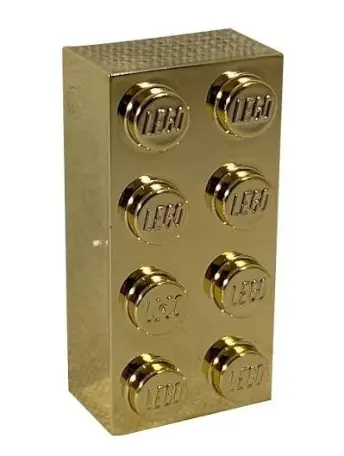
About $2,100 of gold sold for $19,793. That was the result when a 14-karat 2x4 brick went through a Catawiki auction, and it means the buyer paid more than nine times the metal's value, roughly $17,700 extra, for the shape it was cast in. It's the only thing on this page with a floor price set by a commodities market.
The bricks were never for sale. From 1979 to 1981 LEGO® presented them to employees at its Hohenwestedt factory in Germany with more than 25 years of service, and to a handful of business partners. The one that reached auction came from the family of a partner in Italy, and fewer than ten are known. Most of the rest were somebody's quarter century at the factory, which is a strange thing to picture with a hammer price attached. The brick also leads my older rundown of the most expensive LEGO® pieces.

A 14-karat gold brick holding about $2,100 of gold sold for $19,793 at a Catawiki auction, more than nine times the value of the metal. Cited facts, not Baumlinks data. Sources: NBC New York and Just Collecting.
The 14k gold C-3PO
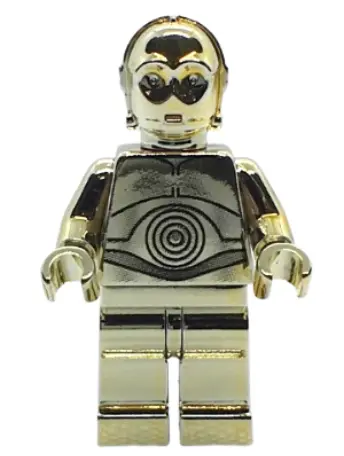
Two gold C-3POs came out in 2007 for the 30th anniversary of Star Wars, and they are easy to confuse.
The common one is chrome gold: 10,000 were hidden in random boxes of that year's Star Wars sets, and BrickRanker values one at $2,326.73. The other is solid 14-karat gold. LEGO® made five and gave them away through a sweepstakes in the March/April 2007 issue of LEGO® Magazine. That's 2,000 chrome figures for every gold one.
Even the chrome version is scarce by our numbers, with 806 owners and 3,186 wanters on Brickset and 16th place on our rarest minifigures ranking. The solid gold one is too rare to rank at all.
Brickfact estimates its value at around $200,000. I couldn't find a confirmed sale at that price or any other, so treat the figure as an estimate. With five in existence there may be no market to observe.

LEGO made five solid 14-karat gold C-3PO figures in 2007 and 10,000 chrome gold ones, which is 2,000 chrome figures for every gold one. Chrome version data: Baumlinks Brick Data, August 28, 2026. Estimate: Brickfact, with no confirmed sale.
When the bubble pops: the Taj Mahal reissue

In late 2017 the cheapest sealed copy of the original Taj Mahal (10189) was listed at $3,000, ten times what it had cost in stores. Then LEGO® announced it was making the set again.
The reissue (10256) cost $369.99 and contained 5,923 pieces. The original had 5,922. The one added part was an orange brick separator, the tool for prying bricks apart.
The original's price fell hard and only recovered some ground after the reissue itself retired at the end of 2020. Trackers disagree on where it stands now. BrickEconomy values a sealed 10189 at $1,046, and BrickRanker, marking its confidence as low, says $587.71. Either figure is at least 65 percent below the peak.
The reissue put the set in nearly twice as many collections, and more people still want the original: 4,709 wanters against 3,155. The goat's reissue left its price alone and the Taj Mahal's cut it by two thirds or more. The difference is what came back. The new goat is a different print, while the new Taj Mahal was the same model with one extra part, and a buyer who only wanted the building had no reason to pay $3,000 for the older box. A sealed box is a bet that LEGO® won't make the thing again, and LEGO® doesn't promise that.

| Stat | 10189 | 10256 |
|---|---|---|
| On sale | 2008–10 | 2017–20 |
| Pieces | 5,922 | 5,923 |
| US retail | $299.99 | $369.99 |
| Owners | 2,636 | 4,982 |
| Wanters | 4,709 | 3,155 |
| Rating | 4.5 | 3.9 |
The 2017 reissue has nearly twice as many owners as the 2008 original, yet more collectors still want the original: 4,709 against 3,155. Data: Baumlinks Brick Data, August 28, 2026. Prices: The Brothers Brick, BrickEconomy and BrickRanker.
How to tell if a LEGO® set you own is valuable
- Look for a figure or part that exists in only one set. Boba Fett's printed arms and the 2011 goat are the pattern, and 435 of the 450 rare minifigures we track appear in exactly one set.
- Check how the item left LEGO®'s hands. A cancelled launch or a numbered run means the supply was capped on day one.
- Keep sealed boxes sealed and loose figures out of the bin. BrickRanker's figures put a used Cloud City Boba Fett about 31 percent below a new one, which is the case for a display case or a minifigure case.
- Don't assume retirement means profit. In Brickfact's study the median set was worth 22.3 percent more a year after retiring, and nearly a fifth hadn't risen at all. Our retirement tracker shows what's leaving next and what just left, and I keep a running list of high-value sets retiring this year. None of them can tell you which sets anyone will want.
About the numbers
Owner and wanter counts come from Brickset members who log their collections, by way of the Baumlinks database snapshot of August 28, 2026. They measure demand among collectors who keep records, and they are not production figures. Resale prices are quoted from the named sources as read on November 11, 2026, and will have moved since. Euro and pound amounts were converted at the November 10, 2026 rates.
If you find a gold man in a top hat at the bottom of a childhood bin, don't let anyone trade you a Roman Commander for him.
Frequently asked questions
What is the rarest LEGO® set?
The rarest sets are the LEGO® Inside Tour exclusives, which are given only to people who take the company's factory tour. The 2009 set, Ole Kirk's House, had a run of 32 copies, according to BrickRanker.
What is the rarest LEGO® piece?
Of the pieces in this article, the solid 14-karat gold brick has the smallest known count, with fewer than ten thought to exist. Bayer and BASF test bricks are also scarce, though nobody knows how many were made.
What is the most expensive LEGO® minifigure?
The solid 14-karat gold C-3PO from 2007 carries the highest estimate, around $200,000 according to Brickfact, with five made. No confirmed sale backs that number, and Mr. Gold at about $9,441 is one of the priciest figures with an active market.
Is LEGO® a good investment?
On average it has been: the Higher School of Economics study found returns of about 11 percent a year across 2,322 sets. The authors caution that it only pays over three years or more and comes with delivery and storage costs.
Are old LEGO® sets worth anything?
Some are, mostly when they are sealed or contain a figure or part that appeared in only one set. Nearly a fifth of retired sets hadn't gained anything a year later in Brickfact's study, so check for single-set figures before assuming the box in the attic is a windfall.

Matt Buxbaum · CEO at Baumlinks LLC
Matt B. spends his time arm wrestling, boxing, and most importantly, building LEGO®. His eclectic tastes give you dynamic information on all things LEGO® news and LEGO® product releases.
Latest from Matt: LEGO® Stocking Stuffers 2026: Small Sets Worth the Stocking · LEGO® Sanctum Sanctorum 76218: Retired Set Guide, Current Value and the New 67005 Sanctum for 2027 · LEGO® 40889 Build, Paint and Play! GWP: Worldwide Availability, Thresholds and Dates